The Connection Between Sleep and Hormone Regulation
Many women have internalized the idea that sleep is something we earn.
They think they’ll sleep when everything is done, the house is clean and everyone else is taken care of.
But one of the most important things I teach the women I support is this:
Sleep is not a reward, it is a biological necessity.
In fact, it is one of the most powerful ways to support your hormones, your energy, and your overall wellbeing.
And when sleep is not prioritized, it can be one of the fastest ways to dysregulate our hormones.
Sleep Issues Look Different for Every Woman
When women come to me for support with their hormones, sleep is often one of the first things we explore.
And just like hormone symptoms, sleep challenges can show up in different ways.
Some of the most common patterns I see include:
✓ Waking between 2–4am can often point to underlying patterns like blood sugar imbalances and the body needing additional liver support
✓ Not feeling rested even after a full night of sleep which is a sign that cortisol is dysregulated in the body and not rising as it should in the morning and/or thyroid is imbalanced.
✓ Difficulty sleeping during certain phases of the cycle (especially in the luteal phase of their cycle, when body temperature naturally rises)
So if your sleep feels inconsistent, you’re not alone.
Your body may be giving you important clues.
The Missing Piece: Why Sleep Matters for Hormones
One of the biggest misconceptions I see is that women don’t fully realize how essential sleep is to hormone health.
Sleep is not just about rest.
It directly influences some of the most important regulators in the body:
Cortisol and insulin.
These two hormones play a major role in how the rest of your body functions.
They impact:
✓ energy levels
✓ blood sugar balance
✓ stress response
✓ metabolism
✓ reproductive hormones
When sleep is poor, cortisol and insulin can become dysregulated.
And when those systems are dysregulated, it creates a ripple effect throughout the body.
This is often why women can feel:
exhausted but wired
craving sugar
struggling with energy dips
experiencing more intense hormone symptoms
Sleep is not a small piece of the puzzle, it’s one of the pillars of hormone health.
My Own Experience With Sleep
For a long time, I thought I was doing everything right.
I was going to bed around 9 or 10pm and sleeping until 6am which meant I was getting a solid 8–9 hours of sleep.
And yet… I was still exhausted.
At the time, I was also:
✓ chronically stressed
✓ commuting to work in the dark at 6:30am (no morning sunlight) for most of the year
✓ relying on caffeine throughout the day
✓ scrolling at night trying to figure out why I felt so tired
I would come home, nap, wake up craving sugar… and the cycle would repeat.
It felt like a vicious cycle that I couldn’t break.
It wasn’t until I started understanding how sleep, stress, and blood sugar were all connected that things began to shift.
What I’ve Seen With the Women I Support
When I work with women and we begin improving their sleep hygiene, the impact goes far beyond just feeling more rested.
Yes, sleep improves.
But so does so much more.
I’ve seen women:
✓ feel more energized throughout the day (no more mid-afternoon energy crashes)
✓ experience fewer cravings
✓ feel more emotionally regulated
✓ notice improvements in their hormone symptoms
Because when sleep improves, it helps regulate and support cortisol and insulin.
And when those systems are supported, other systems in the body can begin to function more optimally.
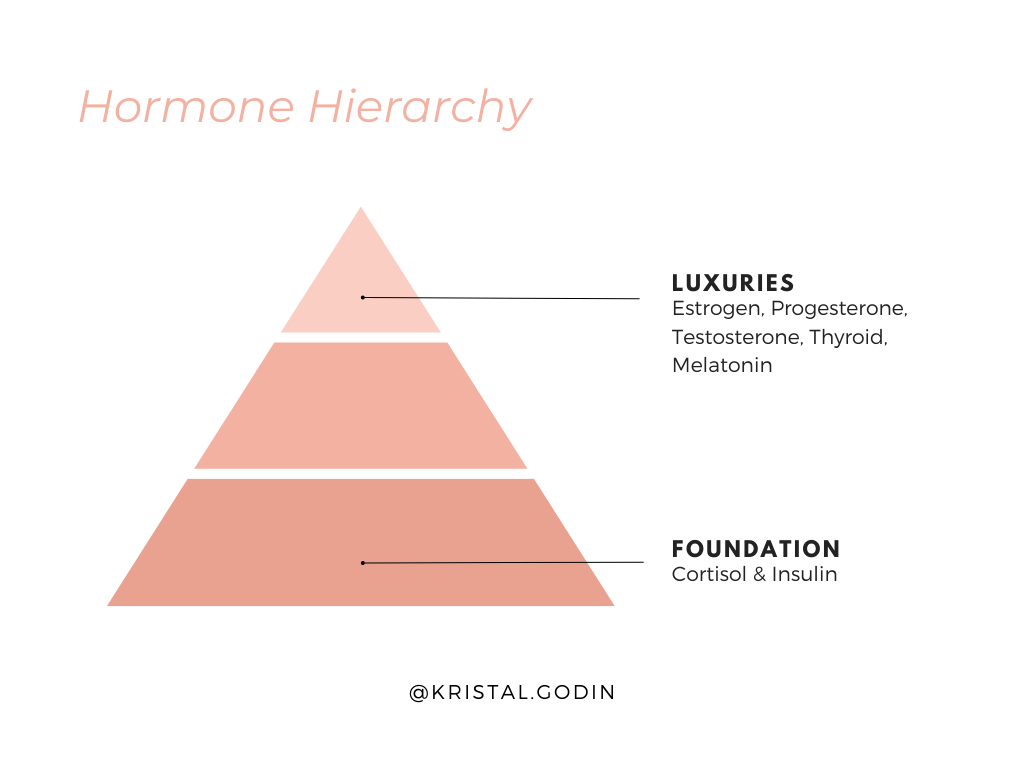
Regulating cortisol and insulin are both part of creating a solid foundation for all your other hormones to thrive.
Holistic Approaches to Support Better Sleep
There are several foundational practices that can make a significant difference when it comes to getting enough good quality sleep every night. This is what I’d start with.
Limiting Caffeine Intake
Caffeine can stay in the body for much longer than many women realize.
It has an average half-life of about 5–7 hours, which means that about half the amount of caffeine in a coffee consumed in the early afternoon can still be circulating in your system by the evening.
Because caffeine stimulates the nervous system and can increase cortisol, it may interfere with the body’s ability to wind down and fall into a deeper, more restorative sleep.

For many women how much caffeine they consume, when they consume it and whether they are relying on it to push through fatigue can have a noticeable impact on sleep quality.
Reducing Light and Screen Exposure at Night
Light plays a powerful role in regulating the body’s sleep-wake cycle.
In the evening, the body naturally begins producing melatonin, a hormone that helps signal that it’s time to sleep.
However, exposure to artificial light, especially from screens, can interfere with this process.
Blue light from phones, tablets, and TVs can signal to the brain that it’s still daytime, which can delay melatonin production and make it harder to fall asleep.
Creating a calming evening routine and reducing screen exposure can help support this natural rhythm.
This might look like dimming lights in the evening, limiting screen time before bed and replacing scrolling with something calming like reading or journaling.
Getting Morning Sunlight
Morning sunlight is one of the most powerful (and often overlooked) ways to support your circadian rhythm.
Exposure to natural light in the morning helps signal to the brain that the day has begun, which helps regulate cortisol and melatonin throughout the day.
This not only supports energy during the day, but also helps the body prepare for sleep later in the evening.
Even a few minutes of natural light in the morning, especially within the first hour of waking, can make a meaningful difference.
If getting outside isn’t always possible (especially during certain seasons), a light therapy lamp (around 10,000 lux) can be a supportive alternative.
That said, natural sunlight will always be the most beneficial when available.
Supporting the Body with Magnesium
Magnesium is a mineral that plays a key role in:
✓ nervous system regulation
✓ muscle relaxation
✓ stress response
✓ sleep quality
Many women are not getting enough magnesium through their diet.
Increasing magnesium-rich foods can be a great place to start, such as:
✓ pumpkin seeds
✓ almonds
✓ dark leafy greens
✓ avocados
✓ dark chocolate
As always, a food-first approach is a great foundation, with supplements used more intentionally when needed. With that said, in some cases, magnesium supplementation may also be helpful.
Forms like magnesium glycinate (bisglycinate) are often well-tolerated and supportive for relaxation and sleep.
It’s important to note that not all forms of magnesium are equal, different types have different effects in the body.
Sleep Is a Non-Negotiable for Hormone Health
One of the most important things I want women to understand is this:
Sleep is not optional. It is one of the most powerful ways to support your hormones.
You cannot put sleep off until later, make up for lost sleep, out-supplement or out-diet poor sleep.
When sleep is consistently disrupted, it places stress on the body and affects how your hormones function.
But when sleep is supported, everything else becomes easier.
→ Energy improves.
→ Cravings stabilize.
→ Stress feels more manageable.
→ Hormones begin to regulate more effectively.
And often, it starts with small, consistent shifts.
Your Next Step for Supporting Your Hormones
If this article resonated with you and you’re starting to see your sleep in a new light, the next step is learning how to support your hormones in a practical, sustainable way.
If you’ve been treating sleep as something optional, I want you to know that support is available.
Inside the Happy Hormone Collective, I’ve created a free workshop called Hormone Foundations, where I walk you through some of the key elements that influence hormone health, including stress, blood sugar, and your body’s natural rhythms.
This is often where things begin to click for women.
Because once you understand why your body is experiencing certain symptoms, you can begin to support it in a more intentional and nourishing way.
Inside the Collective, you’ll also find:
✓ hormone education
✓ simple, supportive practices
✓ a community of women learning how to reconnect with their bodies
And if sleep is something you’re currently working on, we also have a full Happy Hormone Pillar dedicated to sleep, including workshops like Optimizing Sleep, resources like the 7 Types of Rest, and practical guides to help you improve your sleep step by step.
You can learn more and join the Collective here.
Because when women have the right knowledge and support, everything can begin to shift.
It’s time to RISE into your most vibrant mind, body & spirit.

The Happy Hormone Collective is made up of women who are mostly in their 30’s and 40’s navigating hormonal changes related to perimenopause, PCOS, Hashimotos, endometriosis, fertility, and more.
A Gentle Reminder
Your body is always speaking to you.
Real self-care is learning how to listen.
I am honoring you, wherever you are on your journey.
With love,
Kristal
