What Causes Hormonal Imbalances in Women?
If you’ve ever been told that your symptoms are “just part of being a woman,” you’re not alone.
Many of the women who find their way to my work arrive feeling exhausted, frustrated, and confused. They’ve often been dealing with fatigue, weight gain, painful periods, anxiety, or mood swings for years. Somewhere along the way, they began to believe that maybe they just need to try harder, be more disciplined, and push through.
But here’s the truth I wish more women were told:
Your body is not working against you. It’s communicating with you.
What many people call a hormonal imbalance in women is often your body’s way of signaling that something deeper in your lifestyle, environment, or stress load needs attention.
After working with women navigating hormonal challenges, and through my own healing journey with Hashimoto’s, I’ve seen very clear patterns emerge.
Let’s talk about what’s really going on.
What Causes Hormonal Imbalances in Women?
Hormonal imbalances in women are often caused by a combination of lifestyle and physiological factors that affect how hormones are regulated in the body. Some of the most common causes include:
Chronic stress, which elevates cortisol and disrupts hormone signaling
Blood sugar instability, which affects insulin and other hormone pathways
Poor sleep, which interferes with hormone production and regulation
Environmental toxins, which can disrupt the endocrine system
Nervous system dysregulation, which keeps the body in a constant stress response
While these factors influence hormones in different ways, they often share one common theme: they increase the body’s overall stress load.
When the body is under constant stress, hormone balance becomes more difficult to maintain.
One of the most important drivers behind many of these imbalances is chronic stress.
The Real Root Cause: Chronic Stress
In my experience, the most common driver behind hormonal issues in women is chronic stress.
When I say stress, I don’t just mean emotional stress (though that certainly plays a role). I’m talking about the total stress load on the body, which can come from many different sources.
Some of the most common contributors include:
Blood sugar instability
Poor sleep
Environmental toxins
Overtraining or under-recovering
Emotional stress and constant pressure to “do more”
When these stressors stack up, the body shifts into survival mode.
Your brain will always prioritize your survivalover hormone balance.
When the body perceives ongoing stress, it shifts resources toward keeping you safe rather than maintaining optimal hormone signaling. As a result, hormones like cortisol, insulin, estrogen, and progesterone can begin to shift in ways that can lead to symptoms.
And those symptoms are often what women are told are simply “normal.”
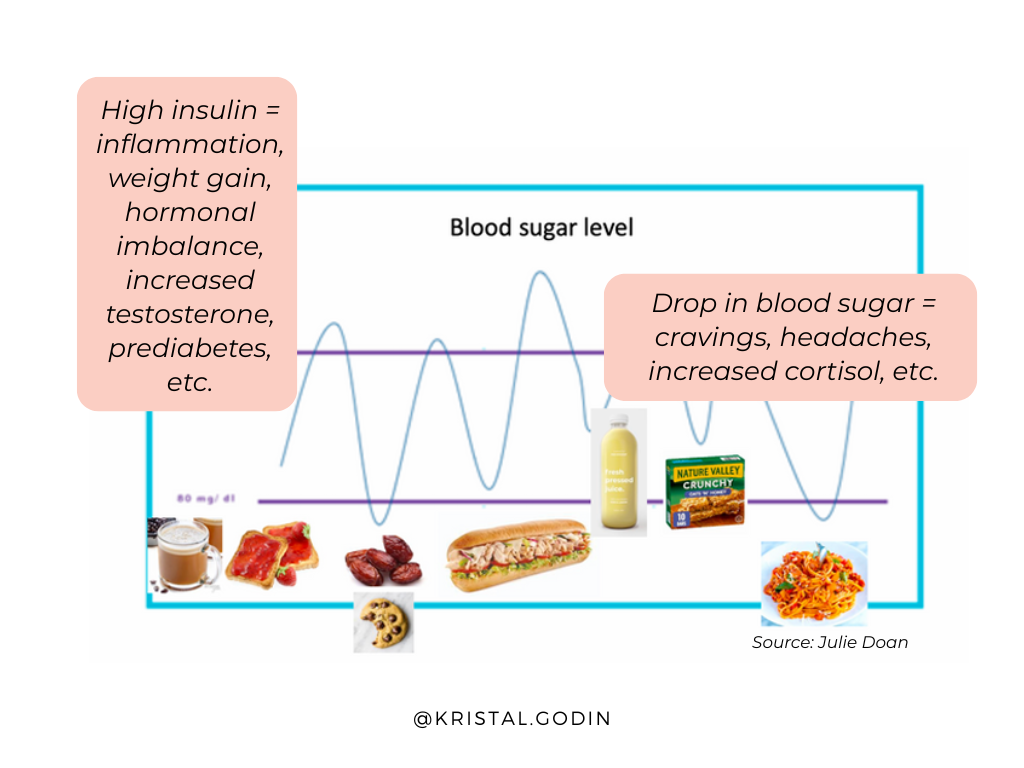
When we eat a diet high in carbohydrates and/or sugar, the body produces insulin to manage the blood sugar spikes. Chronically high insulin can lead to inflammation, weight gain, hormonal imbalance, prediabetes, etc.
The Symptoms Women Are Told to Ignore
Over the years, I’ve noticed that many women share very similar experiences when they first reach out.
They are often incredibly capable, hardworking women who have been pushing themselves for years. They’ve learned to ignore their body’s signals and keep going.
Meanwhile, their body is sending louder and louder messages.
Some of the most common symptoms I see include:
Persistent fatigue
Weight gain or difficulty losing weight
Painful menstrual cycles
Anxiety
Mood swings
Irregular or missing cycles
Yet many women have been told that these symptoms are simply part of womanhood.
Or worse, they start to believe that the solution is simply more discipline or willpower.
But these symptoms are not signs of weakness or failure.
They are signs that the body is under too much pressure.
The Misconception That Keeps Women Stuck
One of the biggest misconceptions I see is the belief that women just need to “try harder.”
They think eating less and exercising more will solve their problems.
Or that pushing through the fatigue is the key to being more productive.
But if your hormones are being affected by stress, pushing harder often makes things worse.
Your body doesn't need more pressure, it needs more support and safety.
When we begin supporting the body instead of fighting against it, things can change surprisingly quickly.
What Happens When We Address the Root Causes
One of the most rewarding parts of this work is watching what happens when women begin supporting their bodies properly.
I see it again and again.
When cortisol and blood sugar begin to stabilize, changes can happen within just a few weeks.
Women often start to notice:
Weight beginning to release naturally
Anxiety softening
PMS improving or even disappearing
Energy returning
Cycles becoming more regular
Missing cycles in conditions like PCOS returning
The body is incredibly intelligent and resilient. When the right foundations are in place, it often begins moving back toward balance on its own.
Where I Encourage Women to Start
When a woman realizes that stress and lifestyle factors may be affecting her hormones, the next question is usually,
“Where do I even start?”
I always come back to three foundational practices:
When a woman realizes that stress and lifestyle factors may be affecting her hormones, I always come back to the three foundational practices: cycle awareness, nervous system regulation and stabilizing blood sugar.
1. Cycle Awareness
Understanding your menstrual cycle is one of the most empowering things a woman can do.
Your hormones naturally shift throughout the month, influencing your energy, mood, focus, and metabolism. When you begin to understand these rhythms, you can start working with your body instead of constantly pushing against it.
Cycle awareness helps women reconnect with their bodies and recognize patterns they may have been ignoring for years.
2. Nervous System Regulation
If chronic stress is at the root of many hormonal issues, then supporting the nervous system becomes essential.
This doesn’t mean eliminating stress completely, that’s not realistic. But it does mean creating regular moments of safety and calm so the body can move out of constant fight-or-flight mode.
Practices like gentle movement, time in nature, breathwork, journaling, or simply slowing down can make a profound difference over time.
3. Stabilizing Blood Sugar
Blood sugar stability is one of the most overlooked pieces of hormone health.
When blood sugar spikes and crashes throughout the day, it creates additional stress for the body and contributes to cortisol dysregulation.
Simple habits like eating balanced meals that include protein, fiber, and healthy fats can go a long way in supporting hormonal health.
Hormonal Changes During Perimenopause and Menopause
For women in their late 30s, 40s, and 50s, hormonal shifts during perimenopause can make these underlying stressors even more noticeable.
During perimenopause, hormones like estrogen and progesterone naturally begin to fluctuate more dramatically. If the body is already under chronic stress, from poor sleep, blood sugar instability, or a dysregulated nervous system, these fluctuations can feel much more intense.
This is why many women suddenly experience symptoms such as increased anxiety, disrupted sleep, weight gain, or heavier cycles during this stage of life.
In my work with women navigating perimenopause and menopause, I often see that the same foundational supports still apply. When women begin stabilizing blood sugar, supporting their nervous system, and working with their body’s rhythms, many of these symptoms begin to feel far more manageable.
Perimenopause isn’t a sign that the body is breaking down, it’s simply a new hormonal chapter that benefits from deeper support and understanding.
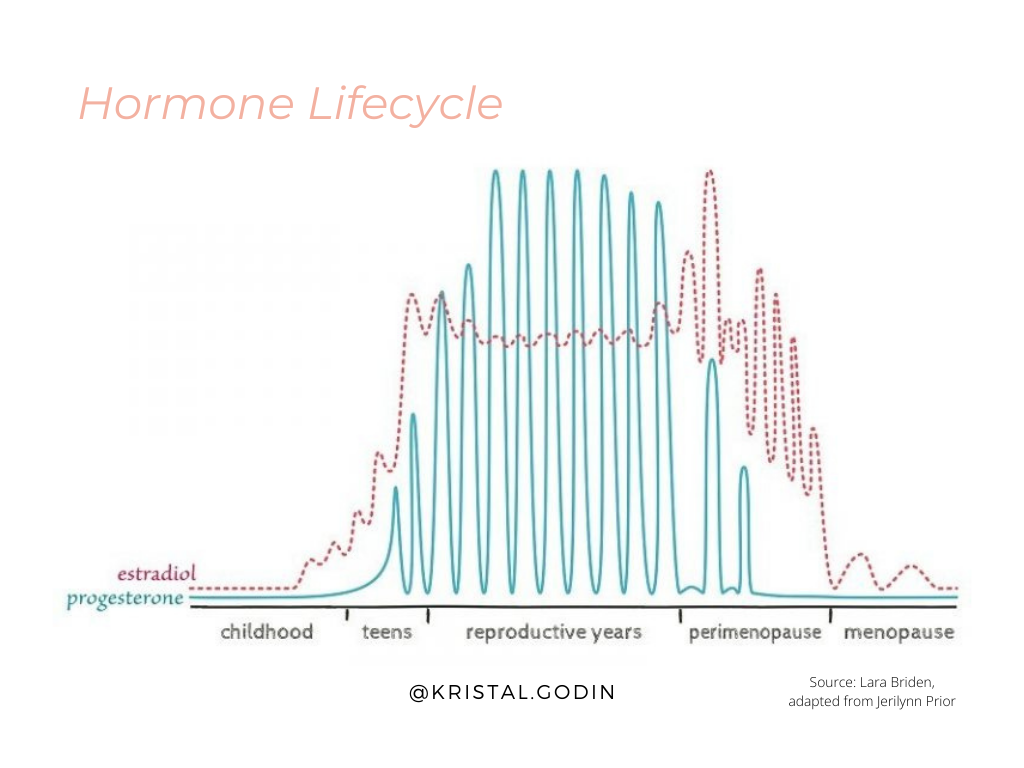
During perimenopause, hormones like estrogen and progesterone naturally begin to fluctuate more dramatically. If the body is already under chronic stress, from poor sleep, blood sugar instability, or a dysregulated nervous system, these fluctuations can feel much more intense.
Your Body Is Not Broken
If you’ve been struggling with symptoms that you’ve been told are “normal,” I want you to know something important:
Your body is not broken.
Often, it’s simply overwhelmed.
When we begin supporting the body through stress reduction, nourishment, sleep, and honouring our cyclical nature, the body often begins to rebalance in ways that can feel almost miraculous.
Hormone health isn’t about forcing your body into balance.
It’s about creating the conditions where balance can naturally return.
And that process begins with listening to what your body has been trying to tell you all along.
Your Next Step for Supporting Your Hormones
If this article resonated with you and you’d like to understand more about how stress and blood sugar influence your hormones, I’ve created a free workshop inside the Happy Hormone Collective called Hormone Foundations.
In this workshop, I explain the concept of the hormone hierarchy, including why stabilizing blood sugar and supporting cortisol are often some of the most powerful first steps for improving hormonal health.
Inside the Collective, you’ll also find hormone education, supportive practices, and a community of women learning how to reconnect with their bodies and support their hormones in a sustainable way.
You can learn more and join the Collective here.
Because when women have the right knowledge and support, everything can begin to shift.
It’s time to RISE into your most vibrant mind, body & spirit.

The Happy Hormone Collective is made up of women who are mostly in their 30’s and 40’s.
A Gentle Reminder
Your body is always speaking to you.
Real self-care is learning how to listen.
I am honoring you, wherever you are on your journey.
With love,
Kristal
